LawLIfeLeanings

Showing posts with label genocide. Show all posts

18 January 2013

Uganda Coalition on the International Criminal Court (UCICC) Annual Publication

Uganda Coalition on the International Criminal Court (UCICC)  

The Forum Magazine 2012


"This issue contains analyses of both critical and pro ICC nature. It is inclusive of different opinions, perceptions and misconceptions surrounding the work of the ICC, since the time of establishment.


This issue is most important for views on the work and impact of the ICC and outstanding considerations are:

(1) What have been the roles of the ICC as a world court since the time of establishment?
(2) The impact of the ICC since establishment.
(3) The common challenges faced by the ICC since the time of establishment.
(4) The different perceptions and misconceptions about the ICC as being another form of neo-colonialism.
(5) The future prospects of the ICC as a world court for future fair delivery of justice and the elimination of impunity.

The forum endeavours to uncover all minds of the researchers, academia and Civil Society Organizations. It is an opportunity for expression of thoughts geared towards the creation of a platform that is essentially beneficial to both the national and International community."

Download the PDF: http://www.ucicc.org/attachments/article/22/The%20Forum%20Magazine%20Issue%20No.%203,%202012%20%20Final%20Copy.pdf

06 November 2012

African Efforts to Close the Impunity Gap

ISS Paper 241: 
Lessons for complementarity from national and regional actions

Max du Plessis, Antoinette Louw & 
Ottilia Maunganidze


The position taken by the African Union towards the ICC creates the impression that African states are resistant to international criminal justice. This paper argues that the reality is quite different. The continent provides many examples of international justice in practice. A review of selected domestic and regional efforts suggests that a richer understanding of the Rome Statute’s ‘complementarity’ scheme is developing – one involving states, regional organisations and civil society working to close the impunity gap. Such actions are giving effect to the notion that while the ICC can provide justice through a few highly publicised trials, for justice to be brought home in any meaningful way, domestic action is essential.  

The publication of this paper was made possible with the support of the Governments of the Netherlands and Norway.


Download the full paper:  http://www.issafrica.org/uploads/Paper241.pdf

09 October 2012

Power and Prosecution - Pouvoir et Poursuite

Kai Ambos  & Ottilia Anna Maunganidze (Eds.)

Power and Prosecution - Pouvoir et Poursuite

Challenges and Opportunities for International Criminal Justice in Sub-Saharan Africa - Défis et Opportunités pour la Justice Pénale Internationale en Afrique SubSaharienne

Göttinger Studien zu den Kriminalwissenschaften - Band 24

This book contains some of the papers that were presented at the fi rst meeting of the newly formed African Expert Study Group on International Criminal Law/ Groupe des Experts Africaines en Droit Pénal International held in September 2011 in Brussels, Belgium. The group was established under the auspices of the Multinational Development Policy Dialogue (hereinafter ‘MDPD’) and the Rule of Law programme of the German Konrad-Adenauer-Stiftung (‘KAS’) in 2010 modeled on the successful sister group in Latin America. This latter group was originally founded as an expert group to monitor the implementation of the Rome Statute of the International Criminal Court (‘ICC’) in Latin America within the framework of cooperation between KAS’ regional Rule of Law Programme and the Department for Foreign and International Law of the Institute for Criminal Law and Criminal Justice of the Georg-August-Universität Göttingen in 2002. 

The newly formed African group consists of judicial experts with both academic and practical background from various parts of Sub-Saharan Africa. The importance of such a group for the African continent cannot be overestimated. Africa plays a vital role in international criminal law and justice, both as an active player at the ICC and at the regional and national level. As for the group’s composition and outreach, the aim is to broaden regional representation and further consolidate membership. In 2012, the group will meet in Nairobi, Kenya to deal with topics surrounding the ‘Potential for the domestic prosecution of international crimes in Africa.’ 

Topics for future meetings abound given the multi-faceted African legal and political practice regarding international criminal justice in general and the ICC in particular. The group should in particular monitor the recent international or transnational criminal justice developments at the regional African level as well as relevant national developments. (Excerpt from the introduction by Kai Ambos)

13 June 2012

Malawi's Stance on al-Bashir is in Line with its International Obligations


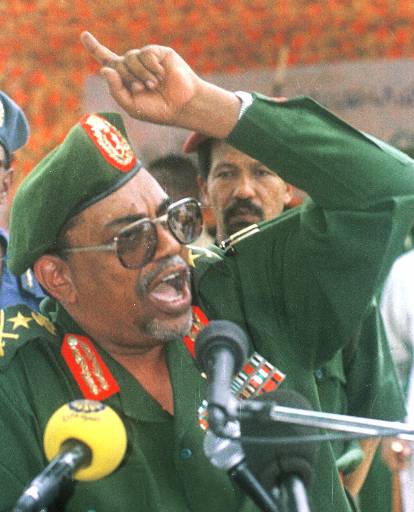
On Friday 8 June 2012, the cabinet of Malawi resolved not to host the next African Union (AU) Summit because the AU insisted that all Heads of State - including Sudanese President Omar Hassan al-Bashir - be invited to attend.

Al-Bashir is wanted by the International Criminal Court (ICC) on charges of war crimes, crimes against humanity and genocide allegedly committed in Darfur. The decision by Malawi's President Joyce Banda not to allow al-Bashir into her country because of Malawi's international obligations has led to widespread reaction throughout Africa.


Malawi's Vice-President Khumbo Kachali made the announcement on Friday 8 June that Malawi would not submit to pressure from the AU to invite Sudanese President Omar al-Bashir to the upcoming AU summit. Kachali stated that, 'much as Malawi has obligations to the AU, it also has other obligations (and) the Cabinet has decided not to host the summit'.

It has been widely reported that President Joyce Banda's decision not to invite al-Bashir and the pursuant decision by the Malawi cabinet are informed by the country's efforts to regain international favour. This kind of speculation could have political implications for Malawi, especially for its relationship with the AU going forward. The political issues surrounding this decision have unfortunately overshadowed the legal dimension of the issue. Of importance in this regard are the United Nations (UN) Charter, the Constitutive Act of the African Union, and the Rome Statute of the ICC. All these instruments, which are binding on Malawi, have specific provisions aimed at promoting global peace and the rule of law, and ending impunity.

First, the UN Charter enunciates as one of its principles the need to maintain international peace and security. Malawi, as a member state of the UN, is bound to its decisions. Under Article 103, the UN Charter provides that obligations under the Charter prevail over any other obligations if there is a conflict. It should be noted that the situation in Darfur was referred to the ICC pursuant to UN Security Council Resolution 1593 in 2005. The UN Security Council invoked its powers under Chapter VII of the UN Charter and provisions in the ICC Statute to oblige the Government of Sudan and 'all other parties to the conflict in Darfur' to cooperate with the ICC (which includes the arrest and surrender of suspects to the court).

Second, one of the primary objectives of the AU is to achieve peace and security in Africa. Specifically, the Constitutive Act of the AU provides a legal framework for the continental organ to fight impunity. Articles 4(h) and (o) of the Constitutive Act authorise the AU to intervene in member states to stop war crimes, genocide, crimes against humanity and ultimately to prevent impunity. However, it should be noted that this intervention is often political.

Last, but certainly not least, is the fact that Malawi's decision is in line with the country's responsibilities under the Rome Statute of the ICC. As an ICC member state, Malawi is obliged to cooperate fully with the ICC in its investigation and prosecution of war crimes, crimes against humanity and genocide, and where requested to arrest al-Bashir (and any other suspects wanted by the ICC) if he visits the country and surrender him to the court. Malawi's decision to arrest and surrender al-Bashir to the ICC should he enter its territory is not unique. Indeed, Malawi's stance is not the first, nor shall it - hopefully - be the last in Africa.

In April 2009, al-Bashir - although invited - decided not to travel to South Africa to attend President Jacob Zuma's inauguration. This decision came after South African authorities and civil society took steps to exercise the country's domestic and international criminal law obligations with regard to al-Bashir. Following similar actions by governments and African civil society organisations, other states have found diplomatic solutions to either avoid al-Bashir's visits or move the venue of important meetings to the territory of non-states parties.


Notably, al-Bashir cancelled trips to Uganda in 2009 and 2010 over fears that he would be arrested, and also did not attend Ugandan President Yoweri Museveni's inauguration in May 2011. Furthermore,
al-Bashir did not attend the ceremony of the 50th anniversary of the independence of the Central African Republic (CAR) in December 2010. Both Uganda and CAR are states parties to the ICC Statute and referred the situations in their respective countries for investigation and prosecution at the ICC. Later that December, al-Bashir cancelled his trip to Zambia (also a state party to the ICC Statute) to attend the International Conference for the Great Lakes Region following international protest. Instead, Sudanese foreign minister Ali Karti and minerals minister Abdel-Baki Al-Gailani attended the summit. Other African countries like Botswana have made it clear that al-Bashir is not welcome.

Nevertheless, since the arrest warrant was issued in 2009, al-Bashir has been able to travel to several countries that are obliged to arrest and surrender him to the ICC, including ICC member states Chad, Djibouti, Kenya, and Malawi in 2010 and 2011. It is worth noting that following his first visit to Kenya in August 2010, civil society action resulted in the Intergovernmental Authority on Development (IGAD) moving its October 2010 special summit on Sudan from Nairobi to Addis Ababa, Ethiopia to
avert a potential diplomatic quandary over al-Bashir's attendance. Further, civil society was in 2011 able to secure a warrant for his arrest from a Kenyan High Court, thereby preventing subsequent visits.

It is clear that African states are divided on the al-Bashir issue. This is despite AU decisions in 2009, 2010, 2011 and January 2012 in which the AU called on all its member states not to cooperate with the ICC in respect of al-Bashir's arrest warrants. The AU argues that, as a head of state, al-Bashir enjoys immunity and should therefore not be prosecuted while in office. The AU also contends that arresting al-Bashir would not be in the interests of peace and would undermine its ongoing efforts to negotiate a peaceful settlement between Sudan and South Sudan.

Despite the AU's decisions on al-Bashir, the facts of the Sudanese president's trips noted above show that some African states have chosen to abide by their domestic and international legal obligations rather than the AU position. These countries, some of which have vowed to arrest al-Bashir, are acting consistently with the rule of law requirements of international criminal justice. However, others abide by the AU decisions even though this means flouting the rules of the ICC.

Interestingly, some countries like Malawi have shown a shift in opinion. In October 2011, before the death of Malawi's former President Bingu wa Mutharika, al-Bashir was able to travel to that country for a regional economic summit. However, with the change in government, the stance in Malawi on international criminal justice has also significantly shifted. But is it enough?

The fact that al-Bashir has not yet been arrested and surrendered to the ICC is evidence that for international criminal justice to succeed, countries, especially ICC states parties, must do more than take principled positions. They must be ready and able to apprehend people indicted by the ICC. It is the lack of full commitment to cooperating with the ICC that led the court's outgoing chief prosecutor Luis Moreno-Ocampo to request the UN Security Council to consider calling on all UN member states and regional organisations to carry out the arrest warrants for al-Bashir and other indicted Sudanese officials. It remains to be seen whether the UN Security Council will oblige and what implications such a move will have.

Malawi should be applauded for its principled and legally correct position on al-Bashir. At the same time, the AU's determination to bring together all heads of state, especially those directly involved in continental conflicts, is understandable and in line with its chief mandate to promote peace and security. Thus moving the summit to a non-state party to the ICC is arguably the right result under the circumstances. However, it is unfortunate that once again peace and justice have been set up against each other in such a polarising manner. It will serve the interests of peace, justice and the rule of law if African leaders are proactive in finding solutions that are both diplomatic and not in breach of international law.

Ottilia Anna Maunganidze is a researcher in the Transnational Threats and International Crime Division of the ISS www.issafrica.org

09 February 2012

Rwanda`s New Genocide Cases a Milestone for Domestic Prosecutions of International Crimes


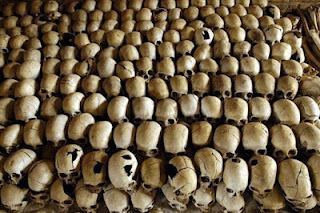
On 6 April 1994, Rwandese president Juvenal Habyarimana and Burundian president Cyprien Ntaryamira were killed in a plane crash. The two were travelling from Tanzania to Rwanda following a heads of state summit in Dar es Salaam. After the crash widespread violence erupted in Rwanda resulting in the deaths of approximately 800 000 people over the next 100 days. Although it has been alleged that the plane was shot down, to date the perpetrators have not been identified. The targets of the Rwandan genocide were predominantly from the Tutsi ethnic group, although moderate individuals from the Hutu ethnic group who were believed to be sympathetic to the then opposition Rwandese Patriotic Front (RPF) were also among the victims.

Eighteen years after the genocide, the quest for justice for the crimes committed in 1994 continues. An international criminal tribunal was set up by the United Nations Security Council (UNSC) to prosecute those who bore the greatest responsibility for the Rwandan genocide. To date, the International Criminal Tribunal for Rwanda (ICTR) has dealt with over 80 cases, securing convictions in 59 of these. The ICTR has achieved important results as far as accountability for the genocide is concerned. However, the tribunal has been criticized for taking too long, being costly to run and prosecuting a small amount of people in comparison to domestic justice processes in Rwanda. Furthermore, the ICTR has been criticized for focusing its prosecutions on Hutus.

In addition to those prosecuted by the ICTR, the Rwandan local and traditional gacaca courts have prosecuted hundreds of thousands of individuals. The combined efforts of the ICTR, the local courts and the gacaca have resulted in a unique and comprehensive approach to ensuring justice for the crimes committed during the 1994 genocide. However, despite overwhelming success, justice has largely remained one-sided and slow. In a 2011 report on the gacaca, international human rights organisation Human Rights Watch criticized the gacaca system and accused the Rwandan government of political interference in the trials. In addition, many senior officials believed to be behind the genocide remain at large and in exile in other countries. These individuals, if extradited to Rwanda, can only face trial before the High Court and not the gacaca.Since 1995, the Rwandan government has sent over 40 extradition requests to various countries.

These requests for the extradition of individuals to Rwanda to stand trial have largely been unsuccessful. However, recent events suggest that those who remain at large could face trial in Rwanda at last.

On 24 January 2012, Canada deported alleged genocide suspect Leon Mugesera back to Rwanda. Mugesera appeared before the Rwandan High Court on 2 February 2012 where he was charged for his involvement in the 1994 genocide. Mugesera, a member of the MRND – the former ruling party in Rwanda – is accused of inciting and planning the genocide. The charges against Mugesera are based on a speech he gave at an MRND party meeting in 1992, in which he called upon people from the majority Hutu ethnic group to exterminate the minority Tutsis who he likened to cockroaches.

Mugesera’s case is the second high profile case that will be dealt with by Rwandan domestic courts. His deportation came just days after the ICTR handed over referral and prosecution materials in the case of Jean Bosco Uwinkindi to the Rwandan courts. Uwinkindi is charged with the crimes of genocide, conspiracy to commit genocide and extermination as a crime against humanity for his involvement in atrocities in Kigal Rural Prefecture.

Uwinkindi’s transfer is the first handover of a case by the ICTR to the national courts of Rwanda. The Prosecutor of the ICTR, Hassan Bubacar Jallow, regards the transfer of the Uwinkindi case as a watershed moment for both the ICTR and Rwanda. Indeed, the transfer of the Uwinkindi case to Rwanda is an important step in acknowledging the ability of the Rwandan criminal justice system to deal with serious crimes.

In addition to the cases of Mugesera and Uwinkindi, in 2011 the US returned to Rwanda two genocide fugitives, Jean-Marie Vianney Mudahinyuka and Marie-Claire Mukeshimana. More recently, the European Court of Human Rights (ECHR) also approved the extradition of another genocide suspect, Sylvere Ahorugeze, who is currently resident in Sweden. The decision of the ECHR, although subject to review, is important for international criminal justice as it has a broad impact, particularly in Europe where it is believed hundreds of Rwandan genocide suspects reside.

The decision of ECHR is the first of a regional human rights court on the extradition of a genocide suspect to Rwanda. As such the judgment sets a precedent for Rwanda to seek extradition of other suspects resident abroad. This decision follows refusals by courts in Belgium, Denmark, Finland, France, Germany, Switzerland, the Netherlands and the United Kingdom to allow the extradition of genocide suspects to Rwanda. Most of these decisions were based on the fact that the courts were not satisfied that the Rwandan judiciary could guarantee a fair trial to extradited genocide suspects.

It is no surprise therefore that the Prosecutor General of Rwanda, Martin Ngoga, has applauded these recent decisions as evidence that the international community believes in the Rwandan criminal justice system. He credits the Rwandan government’s legal reforms for these positive developments. Notably, in 2007 Rwanda abolished the death penalty. Furthermore, since 2008 Rwanda has engaged in capacity building projects aimed at enhancing the performance of the judiciary and ensuring fairness and efficacy of the courts. In addition new courthouses and detention facilities were constructed.

However, despite these recent decisions and the efforts of the Rwandan government to reform the criminal justice system, concerns remain. One of the major concerns relates to whether the Rwandan courts have the requisite capacity to deal with the potential influx of high profile cases. In addition, until recently most courts – the ICTR and those in Europe – did not believe that the Rwandan courts would be able to provide free and fair trials for genocide suspects. Perceptions are changing, albeit slowly. The satisfactory performance of the Rwandan courts will be particularly important for Rwanda’s continued efforts to ensure accountability given that both the ICTR and the gacaca courts will end trials in mid-2012. As a result, the latest genocide trials in Rwanda will be watched closely as they will be the litmus test for any future extraditions or transfers to Rwanda.

ISS Today article written by Ottilia Anna Maunganidze, Researcher, Transnational Threats and International Crime Division, ISS Pretoria

ISS Africa